

Ahead of Lesbian Visibility Week 2024, DIVA investigates what life is like for our younger generations
BY NANCY KELLEY, IMAGE BY ALIAKSANDRBARYSENKA
We know that with each generation more LGBTQIA girls and non-binary children are coming out – in fact, the census shows that about one in 10 girls and young women (16-25) identify as LGBTQIA+. But does that mean that growing up LGBTQIA is easy these days? Are the kids alright?
Relationships at home
However far we’ve come in public acceptance of LGBTQIA people, being out to family and friends is still really hard for some LGBTQIA youth.
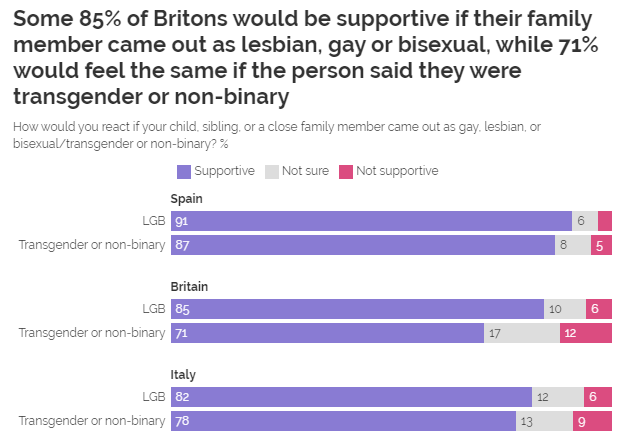
YouGov data from 2021 tells us that the majority of people in Britain say they would be supportive if a family member came out. But 5% of people still say they would be “somewhat” or “very” unsupportive if a family member came out as LGB, and 12% say they would be “somewhat” or “very” unsupportive if a family member came out as trans or non-binary. For an LGBTQIA girl or non-binary child, coming out to an unsupportive family today is as painful now as it was for older generations.
And this isn’t just about coming out. Having unsupportive parents has an ongoing negative impact on LGBTQIA girls and non-binary children. Research by Just Like Us tells us that LGBTQIA young people are far less likely to feel that their relationships with their family are “very close” (27% compared to 50% of straight and cis peers). And a heartbreaking 13% of LGBTQIA young people say their family doesn’t understand them at all.
Bullying and sexual harassment at school
We know that LGBTQIA children and young people are still twice as likely to be bullied. For instance, in research by Just Like Us, 10% of LGBTQIA children reported that bullying was a daily or weekly occurrence, compared to just 4% of straight and cis children.
But when we are thinking about the experience of LGBTQIA girls and non-binary children in school, we have to also consider the incredibly high levels of sexual harassment and abuse that they are exposed to.
In 2021, triggered by the Everyone’s Invited movement Ofsted conducted a rapid review on sexual abuse in schools and colleges which made it clear that harassment and abuse of girls in school is shockingly common. More than 90% of girls said sexist name-calling happens “a lot” or “sometimes” in their school, and around 80% of girls said that unwanted sexual comments, sexual rumours and even sexual assaults were equally common.

So LGBTQIA girls and non-binary children in school are being exposed to homophobia, biphobia and transphobia mixed with toxic sexism and sexually abusive behaviours. For many LGBTQIA girls and non-binary children, this will be their day-to-day experience.
Some things change, some stay the same
It is wonderful that more LGBTQIA girls and non-binary children feel able to come out. There is no doubt that the UK is far more accepting of LGBTQIA people than it was just a couple of decades ago, and there is no doubt that the increased visibility of LGBTQIA people in every walk of public life means that LGBTQIA girls and non-binary children can have role models in their life in a way that just wasn’t possible for older generations.
But that doesn’t mean the kids are alright. LGBTQIA girls and non-binary children are still fighting to survive hostile family environments, and they are – perhaps more than ever before as a consequence of our digital lives – having to navigate a wider world where not just homophobia, biphobia and transphobia, but also violent misogyny is the norm. And every single one of those children and young people deserves better.
Lesbian Visibility Week
22 April – 28 April 2024
This Lesbian Visibility Week we will be celebrating the power of sisterhood by uplifting incredible LGBTQIA women and non-binary people from every generation, in every field and in every country around the world. One community, so many brilliant individuals. This year we are building on Lesbian Visibility Week’s incredible success with unified not uniform – a global campaign celebrating the power and diversity of our community. As ever, our aims are to build public understanding of LGBTQIA women and non-binary people’s lives, to increase lesbian visibility and to create a legacy that benefits our community everywhere.
You can find out more and get involved at: lesbianvisibilityweek.com

DIVA magazine celebrates 30 years in print in 2024. If you like what we do, then get behind LGBTQIA media and keep us going for another generation. Your support is invaluable.


